


Featured brochure
Prepare for respiratory season with FebriDx®.
A concise overview of the rapid, self-contained fingerstick test that helps clinicians differentiate bacterial from non-bacterial acute respiratory infection at the point of care.
Point-of-care testing resources
Clinical evidence, product labeling, and workflow considerations for healthcare providers evaluating point-of-care tests.
Explore clinical evidence, concise product information, and video education designed to support informed evaluation and confident conversations.
Featured brochure
A concise overview of the rapid, self-contained fingerstick test that helps clinicians differentiate bacterial from non-bacterial acute respiratory infection at the point of care.
Evidence and publications supporting informed clinical evaluation.
Perspectives on care delivery, commercialization, and innovation.
Concise overviews of NorthStar portfolio technologies and product use.
Real-world stories of implementation and impact.
Coming soonConversations and perspectives on responsible care and healthcare innovation.
Product education and demonstrations for healthcare professionals.
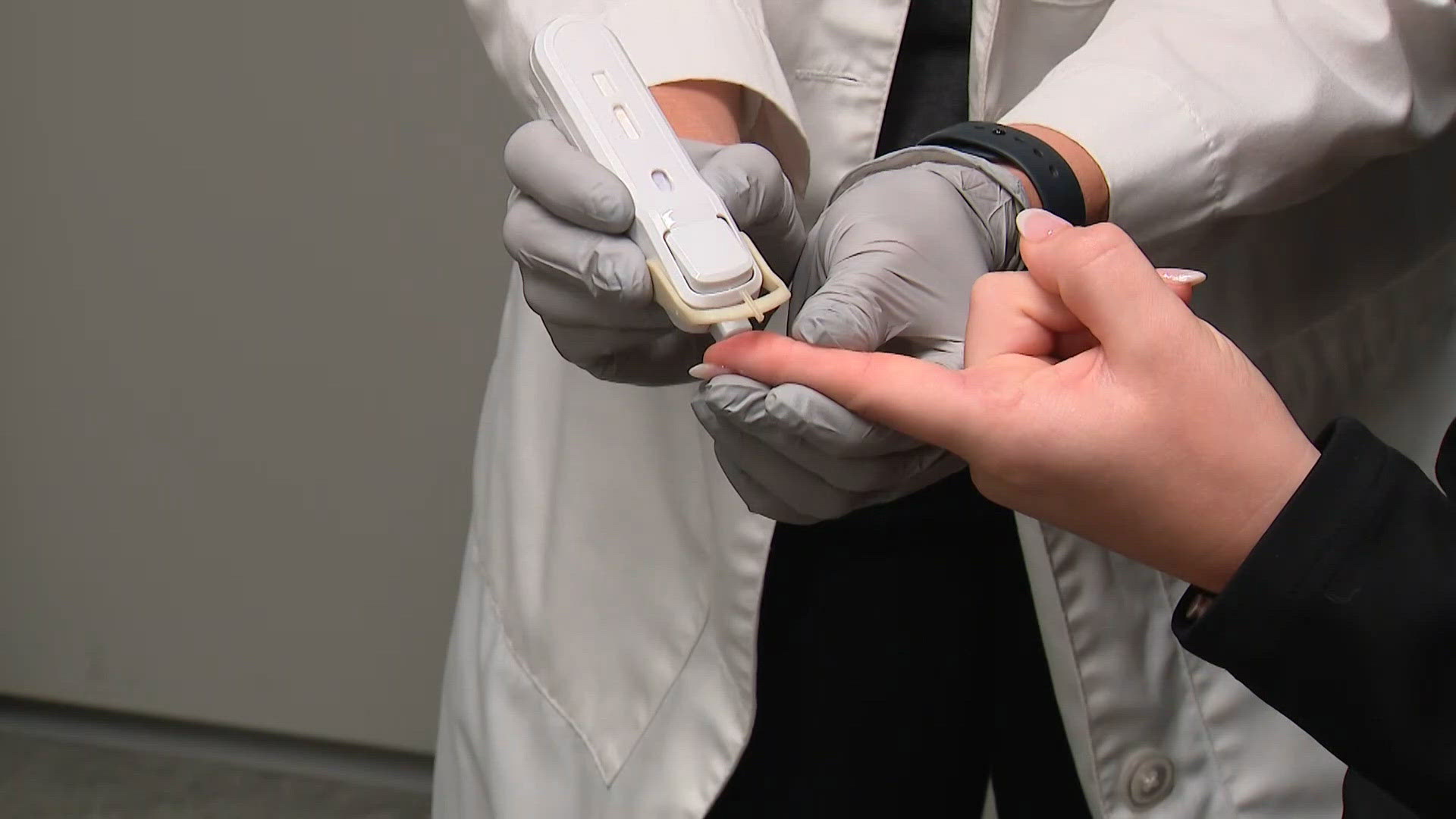 10TV News
External news coverage from WBNS-10TV. The report does not replace the current U.S. Instructions for Use.
Clear answers for care providers and sales professionals.
How FebriDx® works
FebriDx® detects two host-response proteins—MxA and CRP—from fingerstick blood. The visually read result is interpreted at 10 minutes and must not be read after one hour.12
This overview explains the biomarkers and result patterns. It is not a test-use guide and does not replace the current Instructions for Use.
The biomarkers
MxA is an innate host-response biomarker that increases with acute viral infection. The U.S. labeling describes a fast induction time of 1–2 hours and notes that bacterial infection alone does not elevate MxA.1
CRP is a nonspecific acute-phase protein associated with inflammation. The U.S. labeling states that it begins increasing within 4–6 hours, doubles about every 8 hours, and peaks after about 36 hours.1
Approximate medical decision point 20 mg/L serum equivalent13
Neither biomarker alone is sufficiently sensitive or specific to distinguish bacterial infection from non-bacterial etiology in the indicated population. FebriDx® evaluates the multiplexed pattern and must be interpreted with other clinical and diagnostic findings.13
Inside the device
The running buffer releases intracellular MxA, and the sample moves across antibody-conjugated beads and capture lines. The blue control line is an internal procedural control indicating that buffer flowed through the strip.13
Result patterns
Before interpreting the result, confirm that the result window is clear of blood, blood is visible in the clearance window, and the blue control line is present. Read the result from 10 minutes through one hour.12
Grey or black CRP line plus the blue control line, with no red MxA line.
Red MxA line plus the blue control line.
All three lines. Any visible red MxA line is interpreted as non-bacterial etiology.
Blue control line only; neither test line is visible.
No blue control line, regardless of any other line. Discard and repeat with a new device and a new finger.
Faint or incomplete lines count as present. People with color-impaired vision should not interpret the test.12
Content reviewed October 28, 2026. This educational overview does not replace the current manufacturer labeling.
Professional evaluation
FebriDx® evaluates a host response to infection using a fingerstick blood sample. Review its U.S. labeling for the eligible patient population, how results should be interpreted, and test limitations before considering use in your practice.
Read the U.S. Instructions for Use →Stewardship programs aim to improve antibiotic prescribing and use. Diagnostic findings are one part of a clinician's assessment; a test result alone does not determine whether an antibiotic is appropriate. CDC provides stewardship guidance and categorizes antimicrobial-resistant pathogens by their threat to human health in the United States. These CDC resources do not constitute an endorsement of this product.
When evaluating adoption, consider patient eligibility, staff responsibilities, specimen collection, quality control, result documentation, and follow-up. Follow the current Instructions for Use and applicable laboratory requirements. Workflow and financial outcomes depend on the practice; they are not guaranteed.
Request professional information →Need information now?
Choose the professional information you need and we'll help you find the right next step.
Provider status is self-attested; this form does not verify professional licensure. For other business inquiries, visit our contact page.